.png)
Infrabel 3D Models: 3D printing at the service of precision
3D printing is revolutionizing how Infrabel designs and creates models. Whether you're responsible for planning, maintenance, or presenting railway projects, precision is essential. Thanks to 3D technology, you can now obtain accurate, detailed models tailored to your specific needs. Let's explore how this innovation is transforming your work.
Why choose Infrabel 3D models?
Traditional models often require a great deal of time and effort. They may lack detail or not perfectly reflect the reality on the ground. With Infrabel's 3D models, you benefit from a faithful reproduction of railway infrastructure.
Increased precision : Dimensions are respected to the nearest millimeter.
Speed of production : Manufacturing is faster than with traditional methods.
Easy customization : You adapt each template according to your specific needs.
Enhanced visualization : Complex details are visible from all angles.
These advantages facilitate communication between teams and clients. You gain efficiency and clarity during presentations or technical studies.
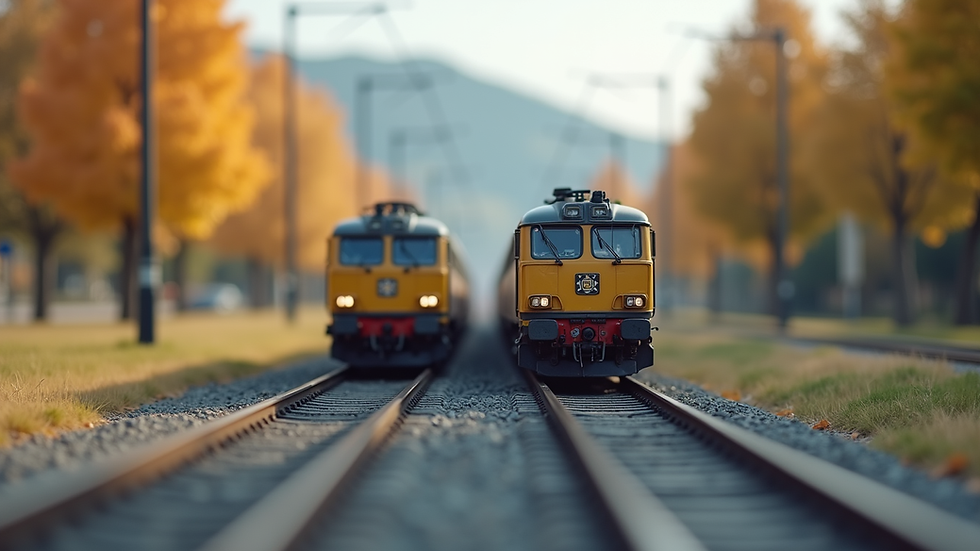
Key steps to successfully creating your Infrabel 3D models
To obtain high-quality mockups, a rigorous process must be followed. Here are the essential steps:
Data collection
Gather all the necessary information: plans, topographic surveys, photos, etc. This data forms the basis of your 3D model.
3D Modeling
Use appropriate software to create an accurate digital model. This step requires precision and a good command of the tools.
Print preparation
Check the model, correct any errors, and prepare the file for the 3D printer. Choose the printing parameters according to the desired material and resolution.
3D printing
Start the printing process. Depending on the complexity, this can take from a few hours to several days.
Finishing
Remove the supports, sand the surfaces if necessary, and assemble the parts. You can also paint or add details for added realism.
By following these steps, you guarantee a functional and aesthetically pleasing model, perfectly suited to your needs.
Which 3D printer is best for model making?
Choosing the right 3D printer is crucial for producing high-quality 3D models for Infrabel. Several criteria should guide your decision:
Precision and resolution
Choose a printer capable of producing fine details, essential for railway components.
Print volume
Make sure the maximum print size meets your needs. Some models require large parts or multiple elements to assemble.
Compatible materials
Printers that accept different types of filaments (PLA, ABS, resin) offer more flexibility.
Reliability and maintenance
Choose a robust model that is easy to maintain and has good technical support.
Cost
Evaluate the value for money based on your budget and frequency of use.
Resin-based (SLA) printers are often preferred for model making due to their high resolution. FDM models remain an economical and versatile option.

How to optimize the accuracy of your models?
Accuracy doesn't depend solely on the printer. Here are some tips to improve your results:
Use high-quality 3D files
The more detailed the model, the more accurate the model will be.
Calibrate your printer regularly
Proper adjustment prevents dimensional errors.
Choose the right material
Some materials deform less and offer a better finish.
Work in a stable environment
Temperature and humidity can influence printing.
Test and adjust
Create prototypes to validate the parameters before final production.
By applying these best practices, you maximize the quality of your mockups and reduce the risk of errors.
The impact of 3D printing on your Infrabel projects
3D printing is transforming the way you design and present railway projects. It allows you to:
Visualize the infrastructure in a concrete way
The models make it easier to understand the technical issues.
Communicating effectively with stakeholders
Customers, engineers, and technicians can better understand the proposed solutions.
Reduce costs and delays
Fewer physical prototypes, less rework, more speed.
Innovating in design
You can easily test different configurations and ideas.
This technology becomes a strategic asset for your projects, offering you a clear competitive advantage.
Become a part of the 3D revolution with O&D 3D
To successfully create your Infrabel 3D models, it's essential to rely on a dependable and responsive partner. O&D 3D positions itself as your indispensable ally. Thanks to its expertise, you benefit from customized solutions tailored to your technical needs and constraints.
Discover how 3D printing for Infrabel models can transform your approach. Together, you will optimize the design and manufacturing of your technical parts and prototypes.
Take your projects to the next level and bring them to life with unparalleled precision and quality. The future of model railroading is in your hands!


Comments