top of page

DISCOVER ALL OUR MATERIALS

PLA

materials.png

PLA, the default material

  • + Ultra-fine print quality

  • + Rapid and detailed prototyping

  • - Not compatible for technical parts or mechanical assemblies

  • - not resistant to solvents and other chemicals

  • - not UV resistant

PETG

materials.png

The PLA's big brother

  • + Good mechanical resistance

  • + Good chemical resistance

  • + Flexible without breaking

  • + More resistant to humidity than PLA

  • + Good compromise between ease of use and durability

  • - Average thermal resistance (~80°C)

  • - Surface less sharp than PLA

materials.png

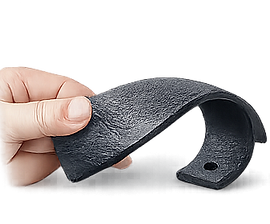
Flexibility without the hassle

  • + Very flexible

  • + Excellent abrasion resistance

  • + Impact resistance

  • + Good chemical resistance

  • + High durability

  • - Bad for structural parts

  • - Slow printing

materials.png

ABS

The classic for technical parts

  • + Good thermal resistance (~100°C)

  • + Good mechanical resistance

  • + Can be smoothed with acetone

  • + Good for functional parts

  • - Poor UV resistance

  • - Strong odor

ASA

materials.png

An external need?

  • + Excellent UV resistance

  • + Good thermal resistance (~100°C)

  • + Good mechanical resistance

  • + Ideal for outdoor use

  • + Can be smoothed like ABS

  • - Price higher than ABS

  • - More technical printing

PA12-CF (Carbon fiber nylon)

materials.png

Rigid, lightweight, technical

  • + Very high rigidity

  • + Excellent mechanical resistance

  • + Very good dimensional stability

  • + High thermal resistance (~180°C)

  • + Reduced weight

  • - High cost

  • - Less impact resistant than pure nylon

  • - Rough surface

PA12-GF (Fiberglass Nylon)

materials.png

Stable, robust, industrial

  • + High rigidity

  • + Very good thermal resistance

  • + Very good dimensional stability

  • + Good chemical resistance

  • + Less fragile than CF

  • - Weight higher than CF

  • - Rougher surface

  • - High price

materials.png

PP (Polypropylene)

Lightweight, flexible and chemical resistant.

  • + Very good chemical resistance

  • + Very lightweight

  • + Very good fatigue resistance (hinges)

  • + Flexible but strong

  • + Moisture resistant

  • - Surface sometimes difficult to paint/glue

  • - Less rigid

  • - Sensitive printing settings

materials.png

PPS-CF

Extreme performance for harsh environments.

  • + Withstands temperatures up to ~220-240°C

  • + Excellent chemical resistance

  • + Very dimensionally stable

  • + Very high mechanical resistance

  • + Used in heavy industry

  • - Very expensive

PA12-GF (Fiberglass Nylon)

materials.png

Stable, robust, industrial

  • + High rigidity

  • + Very good thermal resistance

  • + Very good dimensional stability

  • + Good chemical resistance

  • + Less fragile than CF

  • - Weight higher than CF

  • - Rougher surface

  • - High price

materials.png

PP (Polypropylene)

Lightweight, flexible and chemical resistant.

  • + Very good chemical resistance

  • + Very lightweight

  • + Very good fatigue resistance (hinges)

  • + Flexible but strong

  • + Moisture resistant

  • - Surface sometimes difficult to paint/glue

  • - Less rigid

  • - Sensitive printing settings

materials.png

PPS-CF

Extreme performance for harsh environments.

  • + Withstands temperatures up to ~220-240°C

  • + Excellent chemical resistance

  • + Very dimensionally stable

  • + Very high mechanical resistance

  • + Used in heavy industry

  • - Very expensive

DISCOVER ALL OUR MATERIALS

PLA

materials.png

PLA, the default material

  • + Ultra-fine print quality

  • + Rapid and detailed prototyping

  • - Not compatible for technical parts or mechanical assemblies

  • - not resistant to solvents and other chemicals

  • - not UV resistant

PETG

materials.png

The PLA's big brother

  • + Good mechanical resistance

  • + Good chemical resistance

  • + Flexible without breaking

  • + More resistant to humidity than PLA

  • + Good compromise between ease of use and durability

  • - Average thermal resistance (~80°C)

  • - Surface less sharp than PLA

materials.png

Flexibility without the hassle

  • + Very flexible

  • + Excellent abrasion resistance

  • + Impact resistance

  • + Good chemical resistance

  • + High durability

  • - Bad for structural parts

  • - Slow printing

bottom of page